alexandra alger

ABC

Archive for the category “Writing”

What a Plunge!

IMG_1768

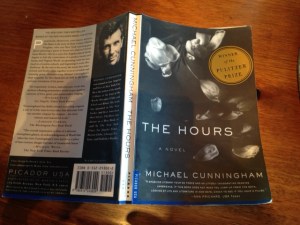
Serendipitous events: I went to a Q&A with author Michael Cunningham (at the Brooklyn Academy of Music) not long before my daughter began reading Virginia Woolf’s To the Lighthouse, not long before I found a copy of Cunningham’s Pulitzer Prize-winning novel The Hours (1998)—an homage to Virginia Woolf—at the lodge where I am now staying in Jackson, Wyoming.

So it seemed like fate: I was meant to reread The Hours.

This was a novel that everyone read and raved about, as I recall—it was The Goldfinch of 1998-99. But all I really remembered was that Virginia Woolf was a character. I’d forgotten why she was a character; I’d forgotten everything, in fact. Until I started reading, and I began to remember. One of the main characters is Cunningham’s version of Clarissa Dalloway, who, in the first chapter, is going off to buy flowers for a party. Later Woolf herself sits down to write the famous first line: “Mrs. Dalloway said she’d get the flowers herself.”

It’s one of few first lines I have never forgotten in all the years since reading Mrs. Dalloway in high school. It’s so simple, and at the same time so distinctive and yes, unforgettable.

In a very funny article Cunningham wrote in the New York Times in 2003 after The Hours was turned into a movie (remember Nicole Kidman with the fake honker, playing Woolf? And then winning the Oscar?), he describes talks about Mrs. Dalloway this way: “Woolf’s novel takes place in one day, during which Clarissa Dalloway, a 52-year-old London society hostess, shops, sees the man she might have married but did not, takes a nap, and gives a rather dull party. However, because it is an ordinary day in the life of an ordinary person as rendered by a genius, by the book’s end we understand that Mrs. Dalloway not only stands with the heroes of world literature but, by extension, that every one of us might stand so, if only a brilliant writer would look at us with sufficient depth and penetration.”

Cunningham makes me think I should be going back to his source of inspiration, but I’m happy to have The Hours in front of me. When his Clarissa centers herself in the moment, in her life, it seems like just right thing to be reading, as the spring we’re all longing for teeters on the edge of being.

“Outside the narrow kitchen window the city sails and rumbles. Lovers argue; cashiers ring up; young men and women shop for new clothes as the woman standing under the Washington Square Arch sings iiiii and you snip the end off a rose and put it in a vase full of hot water. You try to hold the moment, just here, in the kitchen with the flowers. You try to inhabit it, to love it, because it is yours….”
The Iceman Cometh

I can’t last through a two-hour action flick without falling asleep at least once, but guess what—last night I was alert and engaged for the entirety of a FOUR-HOUR-LONG  play. Here I thought the problem was old age, but no! The relief of it—I just needed BETTER writing and acting! In this case, I’m got superior writing and acting in the form of Eugene O’Neill’s The Iceman Cometh, now playing at the Brooklyn Academy of Music.

it’s not an easy play to watch. A dozen or so drunks spend their days and nights at a bar in the Bowery (the year is 1912), using booze to disguise the hopelessness of their lives. Then their friend Hickey shows up and tries to help them get rid of their illusions—which only leads to more bitterness and despair. An incredible cast, led by Nathan Lane and Brian Dennehy. It’s not a flawless play—Hickey repeats himself so much it was distracting—but that seems like a quibble in light of its achievements. Another example of how powerful and enduring the best writing is.

Is it self-defeating to say I can’t hope to be as great a writer as O’Neill? I figure I’m not being self-defeating so much as realistic. The man won four Pulitzers and a Nobel, for crying out loud!  I have to point out that what I’m writing isn’t even eligible for such honors; I dream about a Caldecott.

Which reminds me: It’s time to get back to writing. Re-fueled, unexpectedly, by a spectacle of sheer hopelessness.

A Beef to Warm the Bones

How could I have forgotten about Liz Ann’s brisket recipe? It’s tender and smoky (you’ll see why in a minute) and utterly delicious, without or without a hearty roll or hamburger bun and BBQ sauce, but I recommend both. Good thing Super Bowl XLIX, or I should say the need to make food for my Super Bowl XLIX guests, led me to rediscover this tasty crowd pleaser.

Punxsutawney Phil is predicting six more weeks of winter. What else is new? We East Coasters (north of Washington, D.C., anyway) know that February is always cold and crummy, and let’s face it, much of March is, too. In other words, the time for brisket is now!

Liz Ann’s Brisket

1 brisket of beef, approximately 5 pounds
1 TB natural liquid smoke
2 tsp. salt
1 tsp. paprika
1 tsp. garlic powder
1 tsp. dry mustard
1 cup beef stock
Preheat oven to 325 degrees.

Combine spices in a small bowl and mix well. Brush brisket with the liquid smoke, then rub spices into brisket. Place meat in a covered Dutch oven and bake until fork-tender, about 3 1/2 hours. Begin checking after 2 1/2 hours; if natural juices have dried up, add the cup of beef stock.

Remove from oven. Cool slightly then cut meat into 2-inch strips. Using two forks, pull meat apart, Return meat to pan juices (you can add more beef stock if needed).

Serve on sandwich rolls with BBQ sauce. Great with cold beer. Makes 8-10 sandwiches.

France and its Petty Problems (Joke!)

For anyone who’s interested, I’ve made progress on my resolutions! I’ve thrown out several stacks of old papers and board proceedings. It was easy, and so gratifying…I really have to do it on a more regular basis! I’ve also weeded out my closet, which was even more gratifying. After agonizing on this blog about whether I could really toss items like the skirt I wore on my wedding day and not since, the tossing was surprisingly easy. Something about writing it down—and then Lara wrote in her encouragement (thanks again, Lara!). My desk is still an utter mess, but at least now I can see all those other clothes that I forgot I had.Yes, I realize that if I forgot I had them then I haven’t been wearing them and should be chunking them, too, but I’m choosing to think these are blouses (mostly blouses, oddly) as new additions to my wardrobe. We’ll see how that works out.

It’s a gorgeous Saturday, I’m over the flu that laid me low for a few days, and I’m going to write. If I could just stop reading stories about what’s going on in France. I knew that anti-Semitism was on the rise in France—the odious National Front party, both anti-Semitic and anti-immigrant, gaining support—and I knew French Muslims were living the lives of an underclass, apart from real opportunity. I say “know” about these problems, meaning I’d read about them. Read about them, and forgotten them, as one reads and forgets about news stories all the time. And now the tragedy at Charlie Hebdo and the kosher supermarket have made all these issues painfully real.

As per a new anti-terrorism law, the French are now arresting and incarcerating people who make or post comments supporting terrorism—a guy who yelled support for the Hebdo terrorists getting six months. This is the wrong tack. I’m not against taking measures to criminalize hate speech, but throwing people who are likely just idiot loud-mouths into prison isn’t going to prevent further terrorist attacks. Muslims need improved economic and social mobility in France—that’s the longterm solution. I don’t know how much will there is among other French to give it them, though. The future for Jews in France is grim, too. French authorities say they can protect their Jewish citizens. Can they? Day in and day out? It’s surreal, the idea that they need to be protected at all.

Now I’ve got to get my head back into writing. Oh—first lunch. I worry about the world, but I’m also a master of procrastination.

Resolutions!

I’ve read that 40% of Americans make New Year’s resolutions. That’s it? Fewer than half of us? I admit I’m not as formal about resolution-making as I once was. As a kid U made a list of resolutions every year. I have absolutely no recollection of what those resolutions were, year after year, or how actively I set about meeting them, or if I meet any of them. They were probably boringly benign, like “Get better at ballet,” or “Write Grammy more often”—the kind of stuff that would withstand an accidental parental reading. I wouldn’t be fool enough to put in writing anything I desperately hoped for, like “Get a boyfriend,” the one wish that would consume my adolescence.(I was finally able to check that off the mental list when I was seventeen).

But writing something down can be powerful, and I’ve realized that years of not making formal resolutions have left me in a state of severe disorganization. In the interest of clearing my head for the important stuff (like being able to concentrate on becoming a better writer) I have to clear out the clutter that’s taken over every surface in my immediate vicinity. Piles of papers—clippings, financial statements, manuscript pages, old bills that need filing. It’s a morass I have been avoiding for… umm…years? I can hardly bear to acknowledge how long these piles have been accumulating! I have to get rid of them—asap! I can’t possibly take all year, or even all month.

Resolution #1: Read and file papers on chest of drawers. (Yes, it’s gotten so bad I have a pile next to my jewelry box.) Alternatively: Read and throw out papers on bureau.

Resolution #2: Throw away or do something with the stacks of papers, binders and books on the floor of my office. I’m super bored at the idea of going through them—but I’ve got to do it!

And then there’s the issue of the clothes clogging my side of the closet. Button-downs that seemed so useful at first and now look kind of dorky. (I think my shoulders are too rounded, or something). Sleeveless summer blouses that are too…sleeveless. The dress I bought online that is too revealing and I never got around to returning. (Originally I thought it might not be too revealing. Then I realized I couldn’t possibly wear it ANYWHERE unless I went into the escort business.) What’s the rule of thumb: Throw away anything you haven’t worn in two years? I’m paralyzed by the thought I will then have very few clothes—which is irrational, since I wear tend to wear the same jeans and t-shirts over and over again.

But there’s the question of sentimental value. What to do with that dress I wore at my sister’s wedding sixteen years ago but haven’t worn since? Wouldn’t it be a sort of betrayal to give it away? How about the red linen skirt that was part of my going-away outfit after my own marriage, twenty years ago?

The wheels are turning, rational arguments coming to the fore. It’s not like I’m throwing away my wedding dress—my modest New Year’s goals do not hide marital disarray. (Now that’s an interesting premise for a story, isn’t it? Under what circumstances—other than divorce—would a woman toss her wedding dress?)

Resolution #3: Throw out clothes not worn for two years. (Or most of them.)

I feel better already. Tomorrow I’ll get down to it. This month for sure. I mean it. IMG_1680

Favorite Fictional Orphans

I’m creating a character who’s parentless, a modern-day orphan. Her role models aren’t actual, real orphans (I don’t know any of those, a fortunate thing) but the long line of memorable fictional ones.

As a child I always cleaved to the orphans. Not because they’re free of parental constraints–just the opposite! I got heart palpitations at the thought of complete freedom from parents (no doubt because my parents were insanely controlling). That’s why I had to keep reading. I had to make sure these poor orphans were going to be all right.

Who are my favorite orphans? I know I’m forgetting a few, but this is a good start. In no particular order:

James, James and the Giant Peach, by Roald Dahl (as if there is any doubt who authored this). I wanted to reach into the book and hug James—and then adopt him. Who could not root for James, whose parents die in a freakish accident and who is forced to live with his horrible (if deliciously horrible) aunts before having the most extraordinary adventure (practically) in all of children’s literature?

Anne, Anne of Green Gables, by L.M. Montgomery. I loved Anne’s hot temper, being a hot-tempered redhead myself (and not recognizing a tired cliche). I loved her soulfulness, and her way with words. Of course, Gilbert kept me reading, too. Lucy Maud was clever to give Anne such an appealing antagonist.

Mary, The Secret Garden by Frances Hodgson Burnet). I didn’t like Mary, or this book, for many years. Mary was such a sourpuss! In that heartless way of children, I refused to give her break for being an orphan and alone in a strange, nearly empty house (these English and the way they ignored children!). But she grew on me, especially when she straightened out her whiny, self-pitying cousin, Colin.

Silvia and Bonnie, The Wolves of Willoughby Chase, by Joan Aiken. Bonnie isn’t an orphan at first, but for most of the book her parents are missing and presumed dead, so as far as I was concerned, this was the story of two plucky orphans. What these two have to endure! When Bonnie’s parents go on a long trip, they leave the girls in the hands of a cousin, who turns out to be an imposter, an evil woman who takes over the house and sends the girls to an orphanage. How are the girls to escape—and to where? I read breathlessly.

Bod, The Graveyard Book, by Neil Gaiman. Bod, short for Nobody, is anything but. He’s the kind of boy a girl can’t help liking—the kind of boy who would try to figure out a way to provide a headstone for a witch who was both drowned and burned. He has all kinds of ograveyard skills, like Fading and Dreamwalking, and is clever enough to take down the man who killed his parents. Which reminds me of someone else….

Harry Potter, of course, the most famous orphan of all time (sorry, Oliver Twist and Huck Finn). He’s the only character on this list whose quest is rooted in the brutal murder of his parents. He learns more about his dead parents than most orphans do, and with knowledge comes pain and regret. James and Lily Potter may be the only fictional parents whose loss I actively mourned.

My character will come to mourn hers, but she’ll also find unexpected joy. I’m a sucker for a happy ending.

A Deep, Painful Gratitude

Amid the outrage (justified in my view) in the Ferguson case, I am consumed by another death: that of a 16-year-old neighbor. The young man, brilliant and sensitive, took his own life on a Sunday night a few weeks ago. I know his parents, lovely and loving people. Their son I mainly knew as a kid on the block. I watched his growing up through glimpses on the street, on the way to and from school (he went to a nearby school, not far from the one my children attended). At last glimpse, he’d grown tall and looked very much a young man on the verge of adulthood. Off and on over the years I’d hoped he and my daughter might meet; incredibly, they share a birthday. But somehow they never did meet. Now they never will.

I had coffee with his mother just two days before that Sunday. I think back longingly to that sunny morning. We chatted about our kids, the way parents do, each expecting to have many such conversations in the coming years. Each thinking of the future in the brightest terms. When I saw his mother again she cried and hugged me and said the very thing that I was thinking: If only we could go back to that Friday morning. If only we could reset time. if only we could go back, and stop him.

I dreamed of this boy the other night. He was accompanying me somewhere. I didn’t know him in life, but now I’m dreaming about him. My unconscious mind has a lot to go over. I knew another boy who killed himself at the same age. This boy I knew. And I still mourn him, six years later.

Yesterday I paged through Joan Didion’s The Year of Magical Thinking to read once again her account of losing her husband when he suffered a sudden heart attack. It’s a powerful book; Didion helps me understand profound grief (horribly she would later suffer the loss of her only child to a baffling illness). The magical thinking of the title refers to her conviction that he would come back. She knew he was dead, and yet she was at the same time sure that he would find a way. She just wanted him back, so badly.

These are dark times now for these parents on my block. I wish I knew a way to bring comfort. There may not be any, for a while. Staying in touch, being a community, that would be something. Didion had a friend who brought her congee from Chinatown; it was the only thing she could keep down. Congee. I wonder if should try to find some.

For now, they are with family, in a different part of the country. Hopefully that’s a good thing. I’ll be with family, too, on Thanksgiving. This year, I feel a deep and pain-tinged gratitude for all that I have.

I’m Primed

At a ripe old age, I’m learning a foreign language, one that young women are naturally conversant in: the language of cosmetics.

I have absolutely no natural talent for this. My idea of makeup is lipstick, a swipe of mascara and a few dabs of a foundation to hide the blotches around my nose. But who am I kidding? Most days I’m the best I can do is slather Olay cream on my madly dry skin.

So this is my state of ignorance when I accompany my daughter, Vanessa, to Sephora.

What is she shopping for? Under-eye primer.

Under-eye primer. The words mean nothing to me. Turns out it’s a cream you put on before under-eye concealer.

“You wear under-eye concealer?” I ask. She’s all of sixteen, but she appears to believe she has circles under her eyes.

But back to the primer. It turns out that faces are like walls. The prime kinda does the same thing.

When you’ve entered middle age without knowing what primer for the face is, the news is not exactly earth-shaking. Still, in the spirit of the moment, I bought primer “lash builder primer,” by Clinique. “Conditioning undercoat boosts benefits of Clinique mascara, extends wear.” I have to say it sounded kind of great. Mascara never seems to last on my lashes; that’s partly why I rarely bother with it.

I can now smugly report that my mascara, combined with primer, lasts a full evening. Oh, baby! I actually had trouble getting the stuff off.

Naturally, I’m not getting too carried away. I know a woman does not need makeup to look and feel good about herself. I Girls shouldn’t feel they need it; but many do. it’s part of meeting cultural expectations. I’m part of a generation that said, f*** that, but this generation is different. They seem to find makeup empowering. I dunno, some girls definitely overdo it, and end up looking like 30-year-olds, but I figure there are more important things to make a stink about—like equal opportunity and equal pay for equal work. We have a ways to go there.

And while we’re getting there, I may need a good eyebrow pencil.

Pumpkin Tiramisu

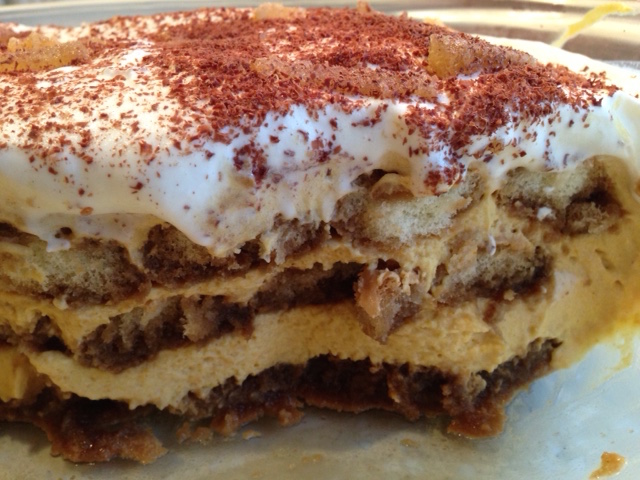
IMG_1391It doesn’t look as tasty in my Pyrex dish as it would in an elegant trifle dish, but this Pumpkin Tiramisu from  Food and Wine magazine’s Thanksgiving issue is a winner. It’s nearly as easy as pumpkin pie–easier, for those who don’t want to bake. I served to this to my book group, and nearly every woman wanted the recipe.

Pumpkin Tiramisu

45 min.; overnight chilling.

Serves 12

One 15-oz. can pumpkin puree

1/2 cup light brown sugar

3/4 tsp. ground ginger

3/4 tsp. ground cinnamon

1/4 tsp. kosher salt

Pinch of fresh nutmeg

3/4 cup granulated sugar

1.5 cups mascarpone cheese

2.5 cups heavy cream

2 cups brewed coffee, cooled

Two 7-oz. packages of dry ladyfingers

Chocolate shavings and candied ginger, for garnish

1. In a large bowl, whisk the pumpkin puree with the brown sugar, ginger, cinnamon, salt, nutmeg and 1/2 cup of the granulated sugar. Add the mascarpone and 1.5 cups of the heavy cream. Using an electric mixer, beat the pumpkin mixture at medium speed until soft peaks form; do no over-beat (getting to soft peaks too some time, more than I expected).

2. In a medium bowl, whisk the cooled coffee with 2 tablespoons of the granulated sugar until it dissolves. Dip both sides of six ladyfingers in the coffee and arrange them a single layer in a 4-quart trifle dish. Spread 1 cup of the pumpkin mousse on top. Repeat the layering 5 more times, ending with a layer of the pumpkin mousse. Cover and refrigerate the tiramisu overnight.

3. In a large bowl, using an electric mixer, beat the remaining 1 cup of cream with the remaining  2 tablespoons of sugar until soft peaks form. Dollop the whipped cream over the tiramisu, garnish with shaved chocolate and candied ginger and serve.

The tiramisu can be refrigerated for 2 days.

Listening to Betsy Bird

I had the honor of attending Pat Cummings’ children’s book illustration class at Parsons yesterday Not only did I get to see student writer-illustrators discuss the first pages of the stories they are working on, but I got to hear the down-to-earth-yet-droll Betsy Bird tell kid-lit publishing stories for more than an hour.

Betsy Bird writes a hugely popular blog for the School Library Journal, Fuse #8 Production, and is the city’s children’s librarian extraordinaire. She’s the New York Public Library’s Youth Materials Collections Specialist, which in plain English means she picks the children’s books carried at all the city’s public libraries. Wowza. And, naturally, she writes books. Her first picture book, Giant Dance Party, illustrated by Brandon Dorman, came out last year. She’s also co-authored, with Julie Danielson and the late Peter D. Sieruta, Wild Things: Acts of Mischief in Children’s Literature.

Betsy is a font of information, some of it rather mind-blowing. To whit:

It can take years to get a picture book published. Betsy’s manuscript was ready to go in 2009; it wasn’t in bookstores until 2013. What happened? For one thing, her editor left (or got fired), and the new editor made all kinds of changes. I can see how that could happen. Still: four years? That’s nothing, apparently. She’s heard of people waiting ten.

If Barnes & Noble doesn’t like your book cover, the publisher is more than willing to change it.

She hates horse books! If she’ve been wondering (as I have been) why the heck no one seems to be reading Black Beauty anymore, Betsy Bird is at least partly the reason. I knew why my daughter wasn’t reading horse books—she’s scared of horses, for no good reason, mind you—but I was wondering what had happened to the whole category….

If you’re writing for kids, you’ve got to get Betsy’s book. It offers up a satisfying trove of insider stories, as well as a meaty discussion on censorship and the obstacles that have faced and still face GLBT authors.

Post Navigation